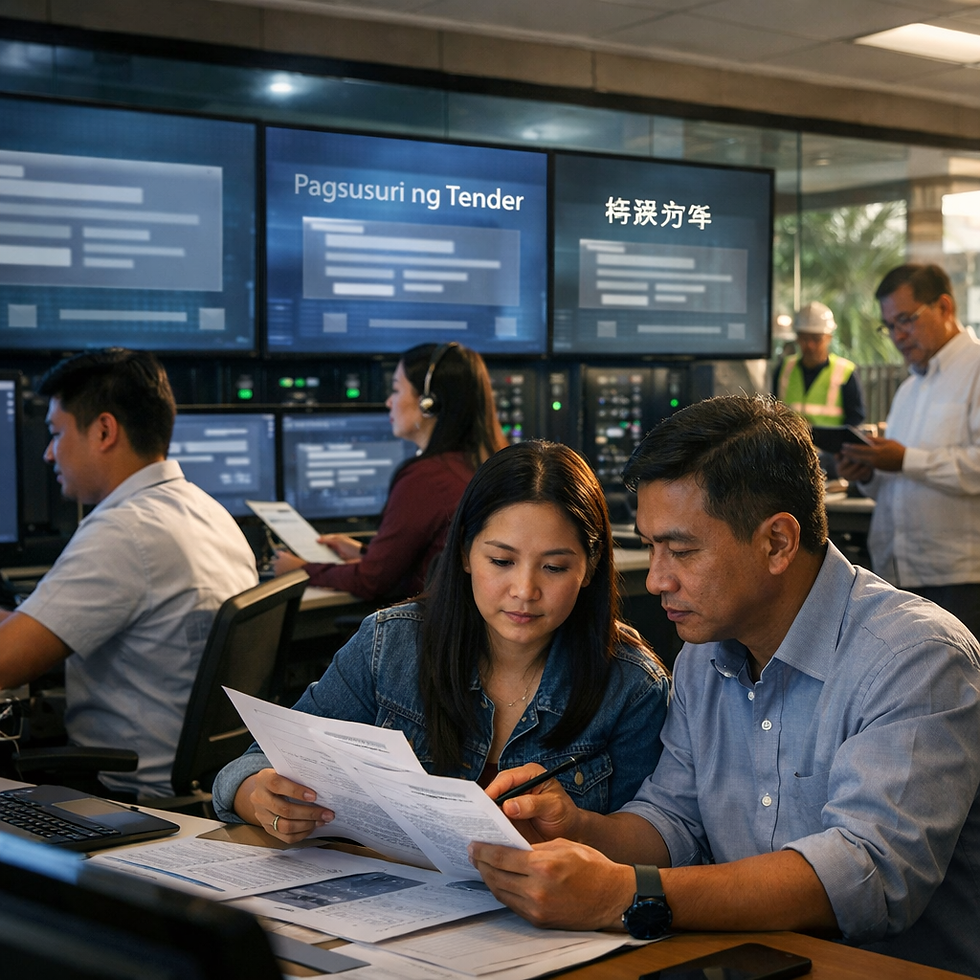
TendersGo AI for Defence Procurement in the Philippines

The landscape of defence procurement in the Philippines is undergoing a significant transformation, driven by the recent implementation of Republic Act No. 12009, the New Government Procurement Act. This legislative update, which took effect in August 2024 with its implementing rules issued in 2025, aims to modernize the nation’s acquisition processes. For businesses looking to engage with the Department of National Defense (DND) or the Armed Forces of the Philippines (AFP), understanding these changes – particularly the nuances of negotiated procurement for critical defence needs – is paramount. However, the sheer volume of procurement notices, often published across various agency websites and PhilGEPS, coupled with the potential for multilingual content, presents a formidable challenge for even the most experienced bid managers. This is where AI-assisted search tools become invaluable, offering a strategic advantage in identifying and interpreting relevant defence contract opportunities Philippines.

Navigating the New Era of Philippine Defence Procurement
The core of the Philippines' modernized procurement framework lies in RA 12009. This legislation not only streamlines general government procurement but also carves out specific provisions for defence-related acquisitions. A key change for defence contractors is the formalized route for negotiated procurement in specific circumstances, such as Defense Cooperation Agreements and Inventory-Based Items . This means that while many tenders will still follow the traditional Invitation to Bid or Request for Quotation formats, a significant portion of strategic defence sourcing may involve direct negotiation with foreign government entities or pre-qualified suppliers/manufacturers. These special modes are typically reserved for cases protecting national interest, where capabilities are not locally available, and specifically for major defence equipment/material or defence-related consultancy services under the AFP Modernization Program.
The Procurement Intelligence Challenge for Defence Contractors
For a bid manager or an export manager targeting the Philippine defence market, the primary challenge isn't just knowing the law, but actively finding the opportunities. Procurement notices are primarily disseminated through PhilGEPS, the central electronic procurement platform, and often mirrored on individual agency websites. These notices can range from detailed Invitations to Bid for large-scale equipment to Requests for Quotation for smaller, specialized services. The sheer volume and distributed nature of these postings make manual monitoring an arduous, if not impossible, task. Furthermore, while many official documents are in English, some local government or specialized agency notices might incorporate local language terms or colloquialisms, adding another layer of complexity to the search. This is precisely where AI tender search for defence procurement becomes indispensable.
For organizations striving to keep pace with these developments and effectively identify relevant defence contract opportunities Philippines, the TendersGo AI Assistant offers a powerful solution. Supported by advanced GPT models and equipped with 77 sector-focused AI agents, including those specialized in defence, it can cut through the noise of thousands of global tender postings. Users can refine their search using dimensions like keywords, country (Philippines), organization (DND, AFP), sector (defence), and even specific CPV, NAICS, or UNSPSC codes. Crucially for the Philippine market, TendersGo addresses the multilingual challenge by presenting non-English opportunities in their original language alongside standardized English translations, ensuring no relevant defence tender is missed due to language barriers or obscure local phrasing. This capability is vital for comprehensive Philippines defence tenders monitoring.
AI-Assisted Search for Philippines Defence Tenders: Practical Application
Imagine a scenario where a foreign manufacturer of specialized drone technology wants to identify opportunities within the AFP Modernization Program. Their search intent is highly specific: find tenders related to "unmanned aerial systems," "surveillance equipment," or "reconnaissance drones" in the Philippines. Without AI, this would involve painstakingly sifting through PhilGEPS, DND, and AFP websites, potentially missing nuances in phrasing or tenders published in less-obvious locations.
Crafting an Effective Search Strategy with AI
A bid manager using an AI-powered platform would begin by defining their search parameters. For Philippines defence tenders, this might involve:
Keywords: "unmanned aerial vehicle," "drone," "surveillance," "reconnaissance," "major defense equipment," "AFP Modernization Program."
Country: Philippines.
Organization: Department of National Defense, Armed Forces of the Philippines.
Sector: Defence, Aerospace, Security.
Procurement Type: Works, Supplies, Services (as applicable to drone systems, which might involve supply, maintenance services, or even infrastructure for deployment).
The AI's ability to understand synonyms, related concepts, and even common misspellings or variations in terminology becomes critical here. For instance, a search for "drone" might automatically broaden to include "UAV" or "RPAS" (Remotely Piloted Aircraft System), ensuring comprehensive coverage.
Overcoming Multilingual Challenges in Philippine Procurement
While English is prevalent in official Philippine government communications, the defence sector, particularly for localized services or specialized components, might occasionally see notices incorporating Filipino terms or regional dialects. For example, a tender for "logistical support for military operations" might be phrased with local nuances. A multilingual procurement search Philippines capability allows the AI to process original-language documents and present them in standardized English, ensuring that a bid manager doesn't miss an opportunity simply because of a language barrier. This is particularly relevant for smaller, more specialized contracts or those issued by regional DND units rather than the central command.
Understanding Specific Defence Procurement Pathways
RA 12009 explicitly acknowledges the strategic importance of certain defence acquisitions. The provision for Negotiated Procurement for Defense Cooperation Agreements and Inventory-Based Items offers a distinct pathway. For a company offering highly specialized or proprietary defence technology, monitoring for these negotiated procurement announcements is as important as tracking open Invitations to Bid. While these may not appear as traditional "tenders," intelligence about potential government-to-government agreements or specific supplier needs can be gleaned from related news, policy announcements, or even preliminary Requests for Information (RFIs) that precede formal solicitations.
The Role of AI in Monitoring Strategic Defence Needs
An AI tender search for defence procurement isn't just about finding explicit tender documents. It's also about gathering intelligence. By setting up saved searches and daily email alerts, a procurement professional can monitor for mentions of the "AFP Modernization Program," "major defense equipment," or "defense-related consultancy services" across various government and news sources. Even if a direct tender isn't immediately available, understanding the DND's strategic priorities and upcoming capabilities gaps can inform a proactive business development strategy, allowing companies to position themselves for future negotiated procurements or direct engagements. This proactive intelligence gathering is a core strength of TendersGo AI Assistant for procurement .
Classification and Terminology in Philippine Defence Procurement
Unlike some regions with highly standardized defence-specific classification codes, the Philippines primarily relies on general catalogue/item coding within PhilGEPS and agency bid documents. This means that a search for "naval vessel components" might require looking for various terms like "marine engines," "radar systems," "communication equipment," or "shipbuilding materials." The AI's ability to process and summarize tender documents becomes particularly useful here. Instead of manually reading through lengthy specifications, an AI tender summary can quickly highlight key items, required specifications, and eligibility criteria, allowing the bid manager to rapidly assess relevance.
Practical Example: Searching for "Defense-Related Consultancy Services"
Consider a firm specializing in cybersecurity for military applications. They would be looking for "defense-related consultancy services" under the AFP Modernization Program. A comprehensive search would involve:
Keywords: "cybersecurity," "information security," "network defense," "consultancy services," "training," "AFP Modernization Program."
Sector: Defence, IT, Consulting.
Procurement Type: Services.
The AI would then scan millions of opportunities, identifying those in the Philippines that match these criteria, regardless of whether they are explicit "Invitations to Bid" or more informal "Requests for Information" that could precede a negotiated procurement. The platform's ability to handle Philippines public procurement intelligence across 220+ countries and 145 languages ensures that even deeply embedded or uniquely phrased opportunities are brought to light.
The Future of Defence Procurement Intelligence in the Philippines
With RA 12009 now in full effect and the continued modernization of PhilGEPS, the digital aspect of Philippine procurement will only grow. The explicit provisions for defence-specific negotiated procurement underscore the need for sophisticated intelligence gathering beyond simple keyword matching. For international and local firms alike, staying competitive means not just reacting to published tenders, but proactively identifying emerging needs and strategic directions of the DND and AFP.
For any business aiming to secure defence contracts in the Philippines, leveraging an advanced platform for search defence notices in English and local languages is no longer a luxury but a necessity. By utilizing the comprehensive search and filtering capabilities of TendersGo , you can precisely target opportunities by keywords, country, organization, sector, and even specific classification codes like CPV or NAICS. The platform’s unique ability to provide AI tender summaries, coupled with its support for saved searches and daily email alerts, ensures that you are always informed about the latest Invitations to Bid, Requests for Quotation, and strategic procurement intelligence related to the AFP Modernization Program. Start exploring the vast landscape of Philippine defence procurement today and gain a significant competitive edge.
Looking Ahead: Proactive Engagement in a Modernized Market
The modernization of Philippine defence procurement under RA 12009 signals a more strategic and, in some cases, a more direct approach to acquiring critical capabilities. For companies in the defence sector, this means a shift from purely reactive bidding to a more proactive strategy of market intelligence and relationship building. Understanding the DND's long-term vision, as articulated in the AFP Modernization Program, and identifying potential areas for Defense Cooperation Agreements or Inventory-Based Items, will be key to success.
AI-assisted procurement platforms will continue to evolve, offering even more sophisticated analysis of procurement trends, supplier landscapes, and policy shifts. For the Philippines defence market, the ability to monitor not just explicit tender announcements but also broader policy discussions and strategic partnerships will provide a significant advantage. This holistic approach to procurement intelligence, driven by AI, will define success for bid managers and business development professionals operating in this dynamic and increasingly vital sector.