France Public Tenders Today — Search on TendersGo

France, a global economic powerhouse, consistently offers a wealth of public procurement opportunities for businesses both domestically and internationally. For bid managers, export managers, and project developers looking to secure France public tenders or France government contracts , understanding the nuances of the French procurement landscape is essential. Navigating the system, from deciphering an France RFQ to responding to an France RFP , requires a keen eye for detail and an appreciation for local regulations. This year, 2026, brings with it updated thresholds and policy adjustments that can significantly impact how businesses approach these opportunities. Let's dig into the specifics.

The Central Hubs for French Procurement
When searching for French public contracts, two names consistently emerge: BOAMP and PLACE. The Bulletin officiel des annonces de marchés publics (BOAMP) serves as the official online bulletin. Think of it as the primary public announcement board where contracting authorities post their intentions. This includes everything from calls for tenders and MAPA (Marchés à Procédure Adaptée) notices to Public-Private Partnership (PPP) contracts, public service delegations, and even European contracts that are subsequently published in the OJEU (Official Journal of the European Union). It's also where award notices are published, providing transparency on who secured specific contracts.
Complementing BOAMP is PLACE, the Plateforme des Achats de l'État, accessible at place.gouv.fr . This isn't just another portal; it's France’s central e-procurement platform. Operated by the Direction des Achats de l’État (DAE), PLACE acts as the digital storefront for state purchases. Here, suppliers can often find tender documents, submit bids electronically, and manage their interactions with central government agencies. For any serious contender, familiarity with both BOAMP for announcements and PLACE for active participation is non-negotiable.
Understanding the 2026 Procurement Thresholds
Procurement thresholds are critical because they dictate the type of procedure a contracting authority must follow and the level of publicity required. These figures, updated for 2026, are set to ensure fair competition and transparency, aligning with both national and European directives. For supply and service contracts, central public authorities now operate with a threshold of €140,000 excluding VAT. Other contracting authorities, such as local municipalities or regional bodies, face a higher threshold of €216,000 excluding VAT. When it comes to contracting entities and defence/security contracts, the threshold rises significantly to €432,000 excluding VAT. For major infrastructure projects, specifically works and concession contracts, the bar is set at €5,404,000 excluding VAT. These figures, in force from January 1, 2026, are directly aligned with the latest EU directives, ensuring a standardized approach across member states.
Beyond these major thresholds, 2026 has introduced some notable simplifications and policy changes. One significant adjustment, effective April 1, 2026, is the increase in the exemption threshold for supply or service contracts. This threshold, below which formal publicity and competition procedures are not strictly required, was raised from €40,000 to €60,000 excluding VAT. This change, based on the December 29, 2025 decree cited in the 2026 procurement guidance, aims to reduce the administrative burden for smaller contracts, particularly beneficial for micro, small, and medium-sized enterprises (MSMEs). Additionally, the €100,000 threshold for public works contracts, previously a temporary measure, has now been made permanent from January 1, 2026. These adjustments reflect a continuous effort by the French government to balance transparency with efficiency in public spending.
Publication Requirements and Local Specifics
While the thresholds guide the procedure, publication requirements ensure visibility. For supply or service contracts valued at €90,000 or more, compulsory advertising is mandated either at BOAMP or in a SHAL (Support Habilité à Recevoir des Annonces Légales). This means that even if a contract falls below the full European threshold, it still needs to be publicly announced, often locally, to ensure a reasonable degree of competition. This dual approach, utilizing both national official bulletins and local legal announcement supports, highlights the French commitment to broad dissemination of opportunities. It’s a detail that international bidders often overlook, assuming that only higher-value tenders receive broad publicity. However, neglecting these local channels could mean missing out on significant opportunities.
The regulatory framework underpinning these requirements is primarily the Public Procurement Code, which sets the €60,000 no-publicity/formal-competition threshold. The December 29, 2025 decree further solidifies the 2026 threshold changes. These legal instruments are crucial for understanding the rules of engagement. The Direction des Achats de l’État (DAE), as the operator of PLACE, plays a central role not just in running the platform but also in interpreting and disseminating official guidance, making them a key authority for procurement policy in France.
Navigating the Volumes: A Snapshot of 2026 Tenders
The sheer volume of public tenders in France is often striking. As of 2026, various reporting sources offer a glimpse into the active marketplace. One portal reports 14,861 live tenders updated daily, indicating a dynamic and constantly evolving environment. Another source puts the number of open France tenders even higher, at 20,029 . Looking at a broader timeframe, one tender listing source stated 76,986 tenders published across 168 days in 2026 . These numbers underscore the robust nature of French public procurement and the continuous demand for goods, services, and works across all sectors.
For those actively seeking opportunities, the deadlines are always a primary concern. We've seen examples of current tender deadlines, such as one for August 24, 2026, for a specific reference on the French tenders portal. Contract award dates also offer insights into the pace of procurement, with one example showing a contract awarded on June 4, 2026. Looking back at early 2026, public service contracts had listed deadlines including January 18, February 5, January 21, January 22, January 30, January 26, January 19, and January 16. These specific dates illustrate the consistent flow of opportunities and the need for prompt action once a relevant tender is identified.
How TendersGo Simplifies Your Search for French Contracts
Given the complexity and volume of the French procurement landscape, a specialized tender search France tool becomes indispensable. This is where TendersGo comes into its own. As the world's largest tender search engine, TendersGo aggregates opportunities from over 220 countries , including every corner of France, presenting them in 145 languages . Imagine sifting through BOAMP and PLACE, not to mention regional portals, all while translating and categorizing. TendersGo does this heavy lifting for you.
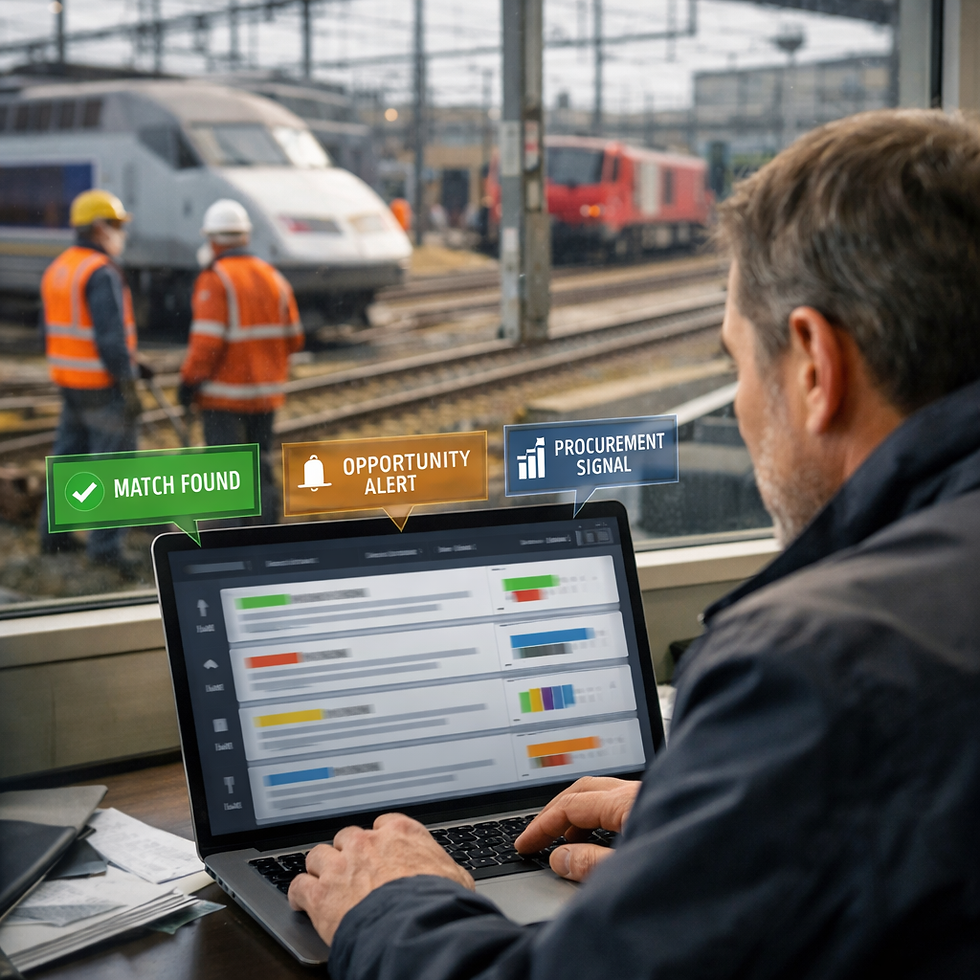
Our platform offers AI-powered summaries of tender documents, allowing you to quickly grasp the essence of an opportunity without wading through hundreds of pages. You can set up unlimited alerts based on your specific criteria, ensuring you never miss a relevant tender. Whether you categorize by CPV codes, NAICS codes, or specific keywords, TendersGo delivers personalized notifications directly to your inbox. The ability to view PDFs of original tender documents, coupled with our B2B marketplace for finding potential partners, creates a powerful ecosystem for securing contracts. We also offer saved searches, so your preferred criteria are always ready to go. A free 30-day trial allows you to experience these benefits firsthand, transforming how you approach public procurement in France and beyond.
Practical Advice for Bidding in France
Participating in French public tenders requires more than just finding the right opportunity; it demands meticulous preparation and adherence to specific local practices. First, ensure all your company registration documents, financial statements, and professional accreditations are up-to-date and easily accessible. French contracting authorities are known for their rigorous verification processes. If you're an international bidder, consider having key documents translated by certified translators, especially those relating to legal standing and financial capacity. While many platforms support English, the official language for tender submissions will almost always be French, particularly for national and local tenders.
Understanding the local procurement culture is also vital. French procurement often emphasizes value for money, technical merit, and sustainability criteria, not just the lowest price. Be prepared to demonstrate your environmental commitments, social responsibility initiatives, and innovative solutions. Engaging with local partners or consultants can provide invaluable insights and help bridge any cultural or linguistic gaps. For tenders above certain thresholds, digital submission through platforms like PLACE is mandatory, so familiarize yourself with the electronic submission process well in advance of any deadline. Remember, a common pitfall for international bidders is underestimating the administrative burden and the need for precision in documentation. Start early, double-check everything, and don't hesitate to seek clarification on tender documents if anything is unclear.
The French public procurement market, with its consistent flow of opportunities and well-defined regulatory framework, remains a highly attractive arena for businesses worldwide. By staying informed on the latest thresholds, utilizing centralized portals like BOAMP and PLACE, and leveraging powerful search tools such as TendersGo, companies can significantly enhance their chances of securing lucrative contracts. The 2026 adjustments reflect a dynamic system, constantly striving for efficiency and transparency, offering a clear pathway for those prepared to engage.