AI Procurement for Chilean Aquaculture Traceability and Compliance

The Chilean aquaculture sector, particularly its globally significant salmon industry, operates under a stringent regulatory framework designed to ensure product traceability and compliance. This landscape presents unique challenges for public procurement entities tasked with sourcing goods and services within this highly regulated environment. For bid managers, export managers, and procurement teams, the critical pain point isn't just finding a supplier, but rigorously screening them for adherence to complex traceability mandates, origin accreditation, and environmental sanitation protocols. This is where AI-driven solutions are emerging as indispensable tools, transforming how public entities in Chile approach supplier evaluation and compliance monitoring in aquaculture procurement.
The Imperative of Traceability in Chilean Aquaculture Procurement
Chile's commitment to robust traceability in its hydrobiological products is not merely a market differentiator; it's a legal and operational necessity. Regulations stemming from SERNAPESCA's resolutions and broader legal frameworks like Supreme Decree No. 129/2013 and Exempt Resolution No. 2,523/2017 demand meticulous tracking of products from cultivation centers to processing plants. Each element within the supply chain, from the initial input to the final product, requires a unique, durable, and tamper-resistant identifier. This extensive requirement means that any public entity procuring goods or services for aquaculture – be it specialized equipment, feed, logistics, or consulting – must ensure its suppliers can meet, or help meet, these exacting standards. The sheer volume of documentation, certifications, and declarations involved in verifying such compliance makes manual supplier screening an arduous and error-prone process.
Chile Aquaculture Procurement: Navigating Regulatory Complexity with AI
The challenge for public procurement professionals in Chile extends beyond understanding the regulations; it involves efficiently verifying that potential suppliers possess the necessary systems and track record. For instance, a public tender ( licitación ) for a new aquaculture research facility might require a construction firm to demonstrate its ability to integrate with existing traceability systems for waste management, or a technology provider to offer solutions compliant with SERNAPESCA's unique identifier requirements. The core problem is the data-intensive nature of compliance: reviewing historical performance, scrutinizing certifications like BAP or SIGES, and confirming adherence to origin accreditation protocols. This is not about procuring "aquaculture AI" as a standalone product, but rather about using AI to enhance the procurement process itself, particularly in the critical areas of supplier screening and ongoing compliance monitoring within this specialized sector.
AI Supplier Compliance: Automating Due Diligence for Public Tenders
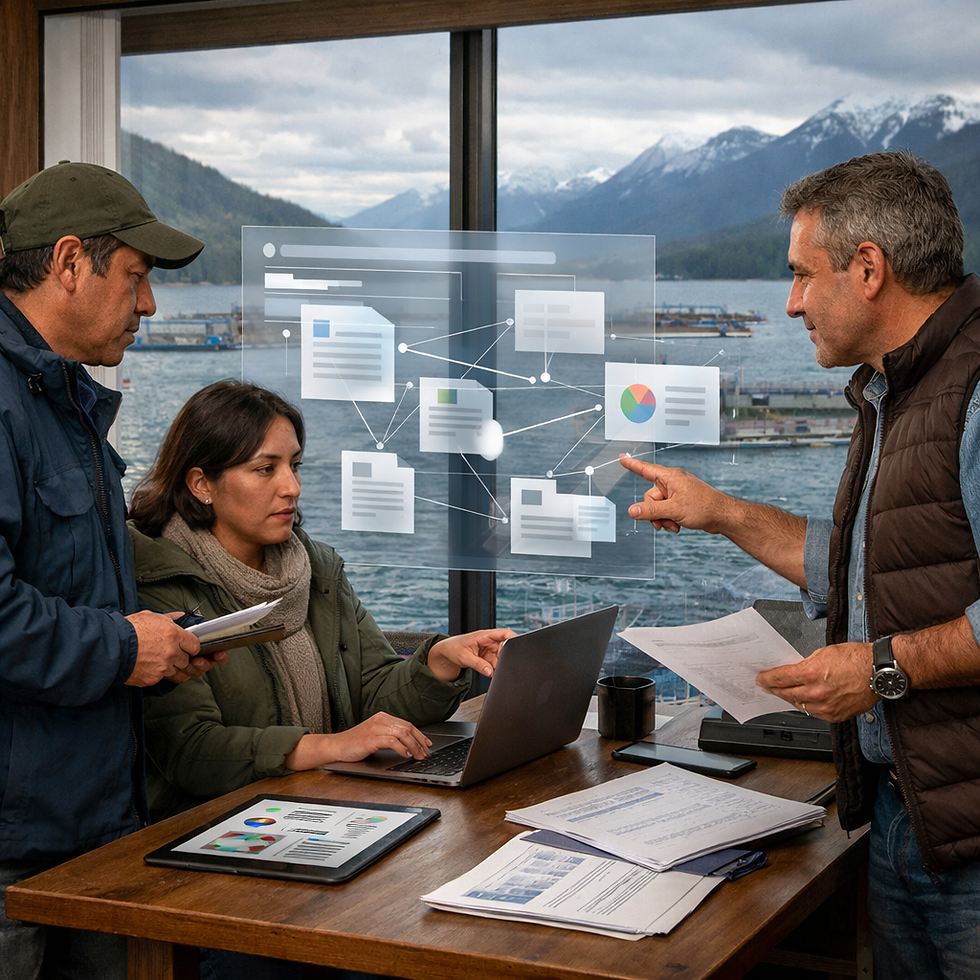
The traditional process of evaluating bids for public tenders on platforms like Mercado Público involves extensive manual review of supplier documentation. For aquaculture, this can include verifying permits, reviewing traceability system declarations, assessing environmental impact reports, and cross-referencing against regulatory databases. An AI-driven approach can automate much of this due diligence. Imagine an AI assistant capable of sifting through thousands of pages of supplier submissions, extracting key compliance declarations, and cross-referencing them with regulatory requirements from SERNAPESCA. This capability moves beyond simple keyword matching; it involves understanding the context of legal clauses, identifying potential discrepancies in supplier declarations, and flagging areas for human review.
For procurement teams, the ability to rapidly assess a supplier's compliance posture translates into more efficient bid evaluation, reduced risk of non-compliance, and ultimately, more secure and traceable aquaculture supply chains. This is particularly relevant when considering large-scale contracts or framework agreements ( convenios marco ) where multiple suppliers might be involved over extended periods, each requiring continuous compliance verification. The goal is to move from reactive compliance checks to proactive risk identification, ensuring that every awarded supplier ( proveedor adjudicado ) fully meets the stringent demands of Chilean aquaculture regulations.
Finding specific tenders that align with these complex requirements, especially across 220+ countries and 145 languages, can be a daunting task for any procurement professional. This is where the TendersGo AI Assistant becomes invaluable. Supported by sophisticated GPT models and featuring 77 sector-focused AI agents, it can interpret nuanced search queries related to Chilean aquaculture traceability, supplier compliance, or even specific regulatory terms like " acreditación de origen ." Users can filter by country (Chile), sector (Aquaculture), and even specific CPV codes or keywords to pinpoint relevant opportunities, receiving AI-generated summaries that quickly highlight key compliance requirements and scope, thereby accelerating the initial discovery and qualification process.
Practical Applications of AI in Marine Supply Chain Procurement
Consider a public entity in Chile looking to procure services for the monitoring of aquaculture cultivation centers ( centros de cultivo ). The tender documents would likely specify compliance with SERNAPESCA's unique identifier requirements for production elements. An AI system could be trained to identify suppliers that explicitly mention experience with such identifiers, digital traceability platforms, or integration with APIs for third-party traceability vendors, as noted in APEC materials. Furthermore, the AI could analyze supplier proposals for evidence of robust internal traceability systems, resistance to alteration or copying, and adherence to phased implementation timelines for new and existing elements, as stipulated by SERNAPESCA's 2025 resolution.
Another practical example involves the procurement of feed or veterinary supplies for aquaculture. Suppliers would need to demonstrate not only product quality but also their own supply chain traceability, ensuring the origin ( origen ) of their components can be verified. AI could scan supplier declarations ( declaraciones ) for certifications, audit reports, and commitments to digital data exchange, providing a consolidated risk profile for each potential supplier. This extends beyond initial bid evaluation to ongoing contract management, where AI can monitor news, regulatory changes, or supplier performance reports to flag potential compliance breaches, thereby supporting continuous compliance monitoring.
Traceability Tenders and Contract Awards: Beyond Basic Search
The search for "traceability tenders" or "aquaculture contract awards" on platforms like Mercado Público requires more than just keyword matching. It demands an understanding of the underlying regulatory context and the types of services or goods that would contribute to enhanced traceability. For instance, a tender might not explicitly state "AI for traceability," but rather call for "digital solutions for origin accreditation" or "systems for managing unique identifiers in processing plants." This is where AI-powered procurement intelligence shines, by identifying opportunities that align with traceability objectives, even if the phrasing is indirect.
Public procurement in Chile, governed by Law 19.886 and executed through ChileCompra/Mercado Público, processes a vast number of transactions. In 2026, with 1,178 buying organizations and 846,400 purchase orders ( órdenes de compra ), the sheer volume of data makes manual analysis for niche compliance requirements incredibly challenging. AI can serve as a powerful filter, sifting through this ocean of data to identify patterns, emerging needs related to traceability modernization, and potential partners. For businesses, this means not just finding tenders, but understanding the specific compliance nuances that will make their bid competitive and compliant.
Bid Evaluation Automation and Procurement Intelligence for Chilean Aquaculture
The process of bid evaluation, particularly for complex public procurement in Chile, is often resource-intensive. AI can significantly streamline this by automating the initial screening of proposals against predefined compliance criteria. For aquaculture, this would involve checking for specific regulatory terminology, references to SERNAPESCA guidelines, and evidence of systems that support unique identification and data integrity. AI can perform sentiment analysis on supplier declarations, flag ambiguous language, or even identify inconsistencies between different sections of a proposal related to traceability commitments.
Procurement intelligence, powered by AI, goes a step further by providing insights into the market. It can analyze past contract awards in the aquaculture sector, identify recurring compliance challenges, and even predict future procurement needs based on regulatory updates or industry trends. For example, if SERNAPESCA announces a new resolution on waste management traceability, AI can anticipate an increase in tenders for related services or technologies. This foresight allows businesses to proactively prepare their offerings and procurement teams to better define their requirements, ensuring they attract suppliers who are truly capable of meeting the evolving regulatory landscape.
The Future of Public Procurement Chile: AI-Enhanced Compliance
The integration of AI into public procurement in Chile, particularly within the aquaculture sector, is not a distant prospect but a current necessity. As regulatory frameworks become more intricate and the demand for transparency and accountability grows, the tools to manage this complexity must evolve. AI offers a scalable and precise solution for managing the vast data involved in supplier screening, compliance monitoring, and bid evaluation. This ensures that public funds are allocated to suppliers who not only offer competitive solutions but also uphold the highest standards of traceability and environmental responsibility.
For businesses looking to secure public contracts within Chile's aquaculture sector, understanding and leveraging AI-driven procurement intelligence is becoming crucial. TendersGo provides a robust platform for this, enabling users to set up saved searches for specific Chilean aquaculture procurement opportunities, including those related to traceability and compliance. With daily email alerts, users are immediately notified of new licitaciones , órdenes de compra , or convenios marco that match their precise criteria, whether it's for "marine supply chain AI," "digital traceability systems," or specific services for " centros de cultivo ." This proactive approach ensures that bid managers and export teams never miss a relevant opportunity to contribute to Chile's vital aquaculture industry.
Moving Forward: Proactive Procurement in a Regulated Sector
The ongoing modernization of traceability systems in Chilean fisheries and aquaculture, supported by initiatives like APIs for third-party vendors, signals a clear direction: digital integration and robust compliance infrastructure are paramount. Procurement professionals and businesses must adopt a proactive stance, utilizing AI to not only respond to tenders but to anticipate market needs. This involves continuous monitoring of regulatory changes, technological advancements in traceability, and the evolving demands of public entities. By embracing AI-driven tools, stakeholders can ensure that Chile's aquaculture sector continues to thrive, built on a foundation of transparency, compliance, and sustainable practices.